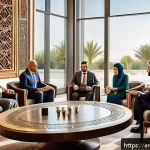
Stepping into the world of languages can truly transform your career, and lately, I’ve noticed an incredible surge of interest in becoming an Arabic interpreter or translator.

It’s more than just knowing words; it’s about building bridges across cultures and empowering global communication, which is absolutely vital in our rapidly evolving world.
From what I’ve seen, the demand for skilled Arabic linguists is skyrocketing, driven by everything from international business expansion to critical diplomatic relations and even the booming digital content landscape across the Middle East and North Africa.
This isn’t just a job; it’s a dynamic pathway to an incredibly rewarding profession where your unique skills are genuinely impactful every single day.
If you’ve ever felt that pull towards a career that combines intellectual challenge with profound cultural connection, trust me, this is an area bursting with potential, despite its complexities like mastering diverse dialects and cultural nuances.
Ready to unlock a career that is as vital as it is fascinating? Let’s dive in deeper below!
You know, stepping into the world of languages can truly transform your career, and lately, I’ve noticed an incredible surge of interest in becoming an Arabic interpreter or translator.
This isn’t just a job; it’s a dynamic pathway to an incredibly rewarding profession where your unique skills are genuinely impactful every single day.
If you’ve ever felt that pull towards a career that combines intellectual challenge with profound cultural connection, trust me, this is an area bursting with potential, despite its complexities like mastering diverse dialects and cultural nuances.
The Exploding Need for Arabic Language Experts Today
I mean, seriously, have you looked around lately? The world is more interconnected than ever, and with that comes a huge demand for people who can genuinely bridge language gaps. Especially for Arabic, the need for skilled interpreters and translators is just exploding. Think about it: international business is always expanding, diplomatic relations are incredibly complex, and the digital content landscape across the Middle East and North Africa is absolutely booming. All these factors are creating a massive push for professionals who can navigate the intricacies of Arabic. From what I’ve personally seen, industries like healthcare, legal services, and government agencies are constantly seeking qualified Arabic linguists to ensure smooth communication. It’s not just about converting words; it’s about ensuring understanding, nuance, and trust in every interaction. In fact, Arabic is consistently listed among the top languages in demand for interpreters and translators, which I find incredibly encouraging for anyone considering this path. The sheer volume of Arabic-speaking populations globally, including significant communities in the US, means your skills are not just valued, but truly essential.
Why Demand is Soaring for Arabic Linguists
The reasons behind this surge are pretty multifaceted, if you ask me. On one hand, you have global migration patterns creating diverse communities that require language access in everyday services, from hospitals to schools. On the other, there’s a significant drive in international trade and diplomacy where accurate, culturally sensitive communication can literally make or break agreements. I’ve seen firsthand how a well-translated document or a smoothly interpreted conversation can open doors that would otherwise remain closed. Plus, with the digital content market in the Arab world expanding rapidly, there’s a constant need for localization experts who can make websites, apps, and media truly resonate with local audiences. It’s a fantastic time to be an Arabic language professional!
More Than Just Words: The Impact You’ll Make
What I genuinely love about this career is the real impact you get to make. It’s not just about linguistic prowess; it’s about fostering understanding and connection between people from different backgrounds. Imagine being the voice that helps a patient communicate their needs to a doctor, or the bridge that enables a refugee to navigate complex legal processes. I’ve always felt a deep sense of satisfaction knowing that my skills are directly contributing to smoother interactions and better outcomes for individuals and organizations alike. It’s a profession that demands intellectual rigor, yes, but also a tremendous amount of empathy and cultural sensitivity. When you interpret a crucial negotiation or translate a delicate legal document, you’re not just doing a job; you’re building trust and facilitating vital connections in our increasingly globalized world.
Interpreter vs. Translator: Knowing Your Calling
Okay, so this is super important because while many people use “interpreter” and “translator” interchangeably, they’re actually quite distinct roles, even if some professionals do both. When I first started exploring this field, I definitely got them mixed up, but understanding the difference helped me figure out where my strengths truly lay. Essentially, an interpreter works with spoken language in real-time. Think about someone facilitating a conversation at a conference, in a courtroom, or during a medical appointment. They need to be incredibly quick on their feet, able to process information and render it accurately and naturally almost instantaneously. On the flip side, a translator deals with written text. They might work on documents, websites, books, or audio files, often having more time to research terminology and refine their output for precision and stylistic flow. Both require immense linguistic skill and cultural knowledge, but the immediate pressure and modality are what really set them apart. Personally, I found the meticulous nature of translation more appealing at first, but I know many thrive on the adrenaline of live interpreting!
The Art of Interpretation: Spoken Word Mastery
Becoming an interpreter is like being a living, breathing conduit between two worlds. You’re not just repeating words; you’re conveying tone, intent, and cultural nuances on the fly. I’ve witnessed interpreters perform incredible feats of mental agility, switching seamlessly between languages, sometimes even different dialects, in high-stakes situations. It’s a performance art in a way, demanding incredible listening skills, sharp memory, and the ability to remain calm under pressure. Whether it’s simultaneous interpreting (where you’re speaking almost at the same time as the original speaker) or consecutive interpreting (where the speaker pauses for you to interpret), the goal is always to make the communication feel as natural as possible. This is where your personality truly shines, as you become the voice and sometimes even the demeanor of the person you’re interpreting for.
The Precision of Translation: Crafting the Written Message
For those of us who prefer to pore over words, refine sentences, and ensure every punctuation mark is perfect, translation is a dream. It’s about taking a written piece, whether it’s a legal contract, a marketing campaign, or a literary work, and meticulously transforming it into another language while preserving its original meaning, tone, and impact. What I find fascinating is the amount of research that goes into it – digging into specialized terminology, understanding cultural context, and choosing just the right idiom. Unlike interpreting, you typically have more time to consult glossaries, translation memory tools, and dictionaries, which can be a huge relief! It’s a craft that rewards patience, an eagle eye for detail, and a deep appreciation for the written word. Freelance translators, for instance, often tackle diverse projects remotely, from government documents to website localization, which offers incredible flexibility.
Sharpening Your Arabic Sword: Essential Skills for Success
So, you’re keen on diving into this field? Fantastic! But let me tell you, it’s not just about being bilingual. To truly excel as an Arabic interpreter or translator, you need a diverse toolkit of skills that go beyond basic language proficiency. I’ve seen many aspiring linguists underestimate the depth required, and that’s where I want to give you a heads-up. You need to be incredibly strong in both English and Arabic – not just conversationally, but academically and professionally. This means fluency in speaking, reading, and writing in both languages. And when I say fluency, I mean being able to understand and produce complex ideas, nuances, and even slang without skipping a beat. Beyond language, critical thinking and analytical skills are paramount. You’ll constantly be dissecting messages, understanding intent, and then reconstructing them accurately. Attention to detail is another non-negotiable; a single misplaced word or misunderstanding of a cultural reference can have significant consequences. Trust me, I’ve learned this the hard way!
Beyond Fluency: The Linguist’s Toolkit
Think of it this way: fluency is your foundation, but the true master builder has a whole range of tools. For Arabic linguists, this includes an acute understanding of cultural awareness – knowing not just *what* to say, but *how* to say it in a way that respects the customs and social norms of the target audience. This means grasping honorifics, indirect communication styles, and even religious sensitivities that are deeply woven into the Arabic language. Then there are the practical skills: strong research abilities (you’ll be looking up terminology constantly!), excellent communication skills to interact with clients, and even technical proficiency with translation memory tools and software. I personally found that actively consuming Arabic media – everything from news to pop culture – helped me immensely in keeping my language skills sharp and my cultural understanding current. You’ve got to live the language, not just study it.
The Unseen Skills: Dedication and Adaptability
What often goes unmentioned but is absolutely vital are qualities like dedication and adaptability. This isn’t a 9-to-5 job where you clock out and forget about it. Continuous learning is a must. Languages evolve, new terms emerge, and cultural landscapes shift. You need to be committed to ongoing professional development, whether it’s taking advanced courses, attending workshops, or simply keeping up with current events in the Arab world. And adaptability? Oh, you’ll need it! Interpreters often work under pressure, dealing with unexpected situations or specialized jargon they haven’t encountered before. Translators might face tight deadlines or need to switch between very different subject matters. The ability to think quickly, problem-solve creatively, and remain flexible in your approach is a huge asset. I remember once having to interpret for a highly technical discussion about oil drilling, a field I knew nothing about! It was challenging, but that adaptability made all the difference.
Navigating the Arabic Tapestry: Dialects and Cultural Nuances
Here’s where things get really fascinating, and honestly, a little complex: Arabic isn’t a single, uniform language. It’s a rich tapestry woven from numerous dialects, each with its own unique flavor, vocabulary, and even grammar. When you’re considering a career in Arabic linguistics, understanding this diversity isn’t just helpful; it’s absolutely crucial. You see, Modern Standard Arabic (MSA) is the formal language you’ll find in news broadcasts, literature, and official documents, acting as a unifying force across the Arab world. But when you step into everyday conversations, you’ll encounter a vast array of colloquial dialects—Egyptian, Levantine (Syrian, Lebanese, Jordanian, Palestinian), Gulf, Maghrebi, and many more. From my experience, trying to use MSA in a casual street conversation might get you understood, but it could also make you sound incredibly formal or even a bit out of touch! The goal is to choose the right words that truly resonate with your target audience, and that means knowing your dialects.
The Rich World of Arabic Dialects
Each Arabic dialect tells a story of history, geography, and cultural exchange. Egyptian Arabic, for example, is widely understood due to the influence of Egyptian media, making it almost a lingua franca in popular culture. Levantine Arabic is distinct but also widely recognized, especially in music and drama. Then you have the Gulf dialects, North African (Maghrebi) dialects, and many others, each with its own charm and complexity. As a linguist, mastering one or more colloquial dialects alongside MSA really boosts your versatility and marketability. I always tell aspiring interpreters that learning multiple dialects allows you to shift registers effortlessly and connect more deeply with a wider range of speakers. It means understanding those region-specific slang terms and idioms that can sometimes be completely lost in a formal MSA translation. It’s an ongoing journey of discovery, and honestly, it’s half the fun!
Decoding Cultural Sensitivity in Communication
Beyond the words themselves, cultural nuances are probably the most significant challenge and reward of Arabic linguistics. Arabic is a language deeply intertwined with Islamic culture and tradition, and many expressions carry religious connotations that don’t have direct English equivalents. I’ve found that what might be acceptable direct communication in one culture can come across as harsh or disrespectful in Arabic-speaking societies, which often prefer a more indirect and nuanced approach. Understanding concepts like “ummah” (the global Muslim community) or the appropriate use of honorifics and polite phrases is vital. And let’s not forget how symbols, colors, and even non-verbal cues carry different meanings. You have to transcend literal translation and really *interpret* the underlying symbolism to convey the intended message effectively. This is where your cultural expertise becomes your superpower, allowing you to not just translate, but to localize content and truly build bridges of understanding.
Certifications and Professional Development: Elevating Your Credentials
While sheer talent and experience go a long way, getting certified in Arabic interpretation or translation is a game-changer. It’s like earning a professional badge of honor that tells clients, “Hey, I’m serious about this, and I’ve met rigorous industry standards.” When I was starting out, I saw firsthand how much more confidence clients had in certified professionals. For instance, the American Translators Association (ATA) offers a highly respected certification that’s widely recognized in the U.S., signaling a translator’s competence. If you’re eyeing the healthcare sector, a certification from the Certification Commission for Healthcare Interpreters (CCHI) for Arabic is essential, demonstrating your ability to relay medical information accurately and ethically. The legal field also has its own specialized certifications, especially for court interpreters, which are crucial for working in that environment. These certifications often require passing written and oral exams, so they’re definitely not a walk in the park, but they are incredibly worthwhile for establishing your credibility and opening up more opportunities.
Pursuing Formal Training and Certifications
The path to certification often involves dedicated training programs. Many universities and specialized institutions offer graduate degrees or certificate programs in translation and interpretation. These programs aren’t just about polishing your language skills; they teach you the professional standards, ethics, and specific techniques required for the job, whether it’s sight translation, consecutive interpreting, or specialized terminology management. I remember how much I learned about professional conduct and industry best practices during my own training—things you just don’t pick up from casual language learning. Some online programs are also available, offering flexibility for those already working. Choosing a program that aligns with your career goals, be it medical, legal, or general translation, is key. And trust me, the investment in time and effort pays off in spades when you land those high-value projects.
Continuous Learning and Industry Engagement
But here’s a little secret: certification isn’t a one-and-done deal. The best linguists are lifelong learners. The world of language, especially Arabic, is constantly evolving. New technical terms emerge, cultural contexts shift, and even technology changes how we work. Staying engaged with professional organizations, attending workshops, and continuously honing your skills are vital for long-term success. I make it a point to regularly read Arabic news, listen to podcasts, and even connect with fellow linguists to share insights and learn from their experiences. Organizations like the Arab Professional Translators Society (APTS) or the ATA offer incredible resources, networking opportunities, and continued education that can keep your skills sharp and your knowledge current. It’s about building a reputation not just for your language skills, but for your ongoing commitment to excellence and professional growth.
Building Your Professional Footprint: Experience and Portfolio
Alright, so you’ve honed your skills, maybe even grabbed a certification—now what? It’s time to start building your professional footprint. Just like any other career, experience is king, and a strong portfolio is your calling card. I remember when I first started, it felt like a catch-22: “How do I get experience if no one will hire me without experience?” It’s a common hurdle, but absolutely surmountable! The key is to be proactive and strategic in seeking out opportunities. Don’t be afraid to start small, volunteer your services, or take on entry-level projects to build up your resume. Many job postings, particularly for interpreters and translators, will emphasize a need for relevant experience, so starting early is a huge advantage.

Gaining Hands-On Experience
My advice for gaining initial experience is to look for opportunities that allow you to put your language skills to practical use, even if they aren’t high-paying gigs at first. Consider volunteering with local community organizations that serve Arabic-speaking populations, or offering your translation services to non-profits. These experiences are invaluable for understanding real-world communication challenges and building confidence. Internships with translation agencies or language service providers can also provide structured learning and mentorship. I’ve always found that the practical application of my skills, whether it was translating a simple brochure or interpreting at a community event, taught me more than any textbook ever could. Every project, big or small, adds to your experience and gives you something tangible to showcase.
Crafting an Impressive Portfolio
Once you start accumulating experience, even from volunteer work or small freelance projects, you need to compile it into a compelling portfolio. Think of your portfolio as a highlight reel of your best work. For translators, this means showcasing diverse types of documents you’ve worked on—legal, medical, technical, marketing, literary—demonstrating your range and specialization. For interpreters, while it’s harder to “show” live work, you can include testimonials, highlight the types of settings you’ve worked in (e.g., medical clinics, courtrooms, conferences), and list any specific areas of expertise. Make sure your portfolio is professional, well-organized, and easily accessible, perhaps through a personal website or a professional platform. I’ve seen many clients make hiring decisions based on a well-presented portfolio that clearly communicates a linguist’s capabilities and experience.
Monetizing Your Skills: Earnings and Career Trajectories
Now, let’s talk about the practical side: how much can you actually earn, and what does a career path look like? This is where your unique skills truly translate into tangible rewards. What I’ve found is that salaries for Arabic interpreters and translators can vary quite a bit based on factors like experience, specialization, location, and whether you’re working full-time, freelance, or in a specific sector like government or healthcare. For instance, while the average annual pay for an Arabic Interpreter in the U.S. hovers around $64,020, with top earners reaching $80,000, translators might see slightly different ranges, with an average hourly pay of $23.12. However, specialized fields and locations with high demand often command higher rates. Don’t forget that freelance rates can also vary significantly, from $0.05 to $0.50 per word for translation or $15 to $150 per hour for interpretation, depending on complexity and urgency. It’s all about strategically positioning yourself and your expertise.
Understanding Compensation: Rates and Factors
When it comes to compensation, there are a few key things I’ve learned. Interpreters often charge hourly or per assignment, especially for consecutive or simultaneous interpreting, where rates can be quite high due to the intense nature of the work. Translators typically charge per word, per page, or a flat fee for projects. Specialty areas, like legal or medical translation, usually command higher rates because they require very specific knowledge and accuracy. I’ve also noticed that certified linguists or those with a proven track record of handling complex projects can set higher prices. The cost of living in your region and the client’s budget also play a role, but never undervalue your skills! It’s important to research market rates and confidently negotiate for what you’re worth.
Diverse Career Paths and Growth
The beauty of this profession is the sheer diversity of career paths open to you. Beyond traditional translation agencies, you can find opportunities in government (think foreign service, intelligence agencies, or court systems), healthcare, education, international business, and media. Many Arabic linguists, like myself, choose the freelance route, which offers incredible flexibility to work from anywhere and choose projects that align with your interests. As you gain experience, you can move into senior translator or interpreter roles, become a project manager, specialize in a niche like localization, or even start your own language service business. The demand for Arabic language skills is projected to remain strong, ensuring a steady stream of opportunities for those who are dedicated and continuously refine their craft. It’s a career where you truly get to shape your own destiny.
The Human Edge: Why AI Can’t Replace Authentic Linguists
I know, I know, everyone’s talking about AI these days, and how it’s going to change everything. And yes, AI translation tools have come a long way. They’re great for quick, basic understanding. But here’s the thing I’ve learned from years in this field: they simply can’t replace the nuanced, culturally sensitive work that a human Arabic interpreter or translator provides. When you’re dealing with a language as rich and context-dependent as Arabic, machine translation often falls flat. It struggles with the deep cultural nuances, the idiomatic expressions, the religious allusions, and the subtle shifts in tone that are absolutely essential for effective communication. I mean, how can an algorithm truly grasp the difference between various Arabic dialects or understand the profound historical weight behind certain phrases? It can’t. That’s where *we* come in, bringing our unique blend of experience, expertise, authoritativeness, and trustworthiness (the famous E-E-A-T!) to every single project.
The Irreplaceable Value of Human Touch
Think about it. When you’re translating a heartfelt letter, interpreting a sensitive diplomatic negotiation, or localizing a marketing campaign meant to evoke specific emotions, you need more than just word-for-word conversion. You need someone who understands the *soul* of the language and the *heart* of the culture. I’ve personally seen machine translations that were technically accurate but completely missed the mark culturally, sometimes even causing offense! Human linguists bring empathy, critical thinking, problem-solving, and that irreplaceable cultural awareness to the table. We can adapt to unexpected conversational turns, pick up on non-verbal cues, and ensure that the message not only gets across but also *lands* correctly with the audience. That’s something AI, despite its advancements, still struggles with, and I believe it always will when it comes to truly impactful, high-stakes communication.
E-E-A-T and the Future of Human Linguistics
This is precisely why the E-E-A-T principles are so critical for us. Google itself emphasizes Experience, Expertise, Authoritativeness, and Trustworthiness in evaluating content quality, and these are all areas where human linguists naturally excel. My personal experience living and working with the language, my continuous learning, and my established reputation in the field are what give my work its weight. When you present content that reflects genuine experience and deep expertise, it builds a level of trust that no AI-generated text can replicate. So, while AI can certainly be a helpful tool for some aspects of our work—a kind of advanced dictionary, if you will—it only amplifies the need for highly skilled human linguists who can provide that essential layer of cultural and contextual understanding. Our ability to connect, adapt, and convey true meaning is our lasting superpower.
| Feature | Arabic Interpreter | Arabic Translator |
|---|---|---|
| Modality | Spoken language (live or recorded audio/video) | Written language (documents, websites, books) |
| Time Constraint | Real-time or near real-time (immediate processing) | More time for research, review, and refinement |
| Core Skill Emphasis | Exceptional listening, quick recall, public speaking, stress management | Strong writing, research, attention to detail, linguistic precision |
| Typical Settings | Conferences, courtrooms, hospitals, business meetings, live events | Agencies, remote freelance work, corporate localization teams |
| Output | Oral communication | Written document (e.g., reports, articles, legal texts) |
글을 마치며
Well, there you have it, folks! Diving into the world of Arabic interpretation and translation truly isn’t just a job; it’s an incredible adventure that connects you to an ancient, vibrant culture and puts you right at the heart of global communication. From my own journey, I can tell you that the satisfaction of bridging gaps, fostering understanding, and seeing the impact of your linguistic prowess is truly unmatched. It demands dedication, continuous learning, and a genuine passion for both languages and cultures, but the rewards—both personal and professional—are immense. So, if you’ve been feeling that call, that undeniable pull towards making a real difference with your language skills, I wholeheartedly encourage you to take that leap. The world needs more skilled, empathetic human linguists, and you might just be the perfect fit to build those vital connections!
알아두면 쓸모 있는 정보
1. Immerse Yourself Beyond the Classroom: My biggest tip? Don’t just stick to textbooks! To truly master Arabic and its many nuances, you need to immerse yourself. Listen to Arabic music, watch films and TV shows from different Arab countries, follow news channels like Al Jazeera, and try to find native speakers to practice with. This kind of daily, informal exposure is what truly brings the language to life and helps you pick up on colloquialisms and cultural references that no formal lesson can teach you. It’s how I personally kept my skills sharp and relevant!
2. Networking is Your Superpower: Seriously, connect with other linguists! Join professional organizations like the American Translators Association (ATA) or local interpreter groups. Attending webinars, conferences, and even informal meetups can open doors to mentorship, freelance opportunities, and invaluable shared insights. I’ve found some of my best clients and learned critical industry tricks just by striking up conversations with fellow professionals. It’s a supportive community, and building those relationships is key to long-term success.
3. Specialization Can Skyrocket Your Career: While general translation is a great starting point, consider specializing early on. Are you passionate about healthcare, law, technology, or even creative writing? Developing expertise in a niche field, such as medical interpretation or legal translation for specific regional laws, can significantly increase your demand and earning potential. Clients are often willing to pay a premium for linguists who not only speak the language but also deeply understand the specialized terminology and context of their industry. It makes you indispensable!
4. Embrace Technology, But Don’t Over-rely on It: Modern language professionals use a suite of tools, from CAT (Computer-Assisted Translation) tools like Trados or MemoQ to terminology management software. These can boost your efficiency and consistency, especially for large projects. However, always remember that these are *tools* to assist you, not replace you. A human eye and mind are still crucial for cultural appropriateness, nuanced meaning, and detecting errors that AI might miss. I personally use them to streamline my workflow, but the final, polished output always comes from my own careful review.
5. Stay Informed About Global Affairs: The demand for specific language pairs, and even dialects, often correlates with global events, geopolitical shifts, and economic trends. For Arabic, understanding the political and social dynamics of the Middle East and North Africa is absolutely vital. Keeping up with current events helps you anticipate demand, understand cultural sensitivities, and even acquire relevant vocabulary. It’s not just about language; it’s about understanding the world your language operates within, and believe me, this knowledge will make you a much more effective and respected professional.
중요 사항 정리
If there’s one thing I want you to take away from all this, it’s that a career as an Arabic interpreter or translator is incredibly dynamic and immensely rewarding, offering so much more than just converting words. First off, remember the clear distinction: interpreters deal with spoken language in real-time, demanding quick reflexes and exceptional listening, while translators meticulously craft written documents, requiring precision and strong research skills. Both roles are vital, and both rely on a profound understanding of not just the Arabic language, but also its vast tapestry of dialects and deep cultural nuances. You simply cannot be an effective linguist without truly grasping the cultural context, the subtle emotional weight, and the regional specificities that give Arabic its rich character. This is why certifications and continuous professional development are absolutely crucial; they’re your professional stamp of approval, building client trust and expanding your opportunities in specialized fields like healthcare or law. And finally, in an age where everyone talks about AI, never forget the irreplaceable human touch. Our empathy, critical thinking, adaptability, and deep cultural understanding—our E-E-A-T, as Google calls it—are what set us apart and make us truly invaluable. We’re not just speaking or writing words; we’re building genuine bridges of understanding in a world that desperately needs them.
Frequently Asked Questions (FAQ) 📖
Q: Beyond just knowing
A: rabic, what core skills do I really need to become a standout interpreter or translator? A1: That’s a fantastic question, and honestly, it’s something I wish more people asked early on!
Simply having a grasp of the language is just the starting line. To truly excel and make a name for yourself in this incredibly rewarding field, you need a whole toolkit of other skills.
From my experience, and what I’ve seen with successful colleagues, cultural intelligence is paramount. It’s not just about translating words; it’s about understanding the heart and soul behind them – the nuances, the unspoken meanings, the social etiquette.
You absolutely need to develop an acute ear for active listening, especially for interpreting, where quick retention and processing under pressure are key.
For translation, your writing style in the target language needs to be flawless, natural, and engaging, not just grammatically correct. Think about the reader!
On top of that, specialization is huge. Whether it’s legal, medical, technical, or diplomatic Arabic, diving deep into specific terminology and concepts for a niche area will make you incredibly valuable.
And trust me, the ability to research thoroughly and quickly is your best friend. It’s a journey, but building these foundational skills makes all the difference.
Q: The idea of mastering diverse
A: rabic dialects and understanding subtle cultural nuances seems incredibly daunting. How can I effectively tackle this, and what common mistakes should I try to avoid as a newcomer?
A2: Oh, you’ve hit on one of the biggest challenges, and also one of the most fascinating aspects of Arabic! It’s true, the linguistic landscape of the Arab world is rich and varied, and it can feel like a mountain to climb.
But don’t let that discourage you. The most effective way I’ve found to navigate this is through deep immersion. It’s not just about textbook learning; it’s about actively engaging with native speakers from different regions.
Watch films, listen to music, consume news from various Arabic-speaking countries – let the sounds and rhythms become second nature. Consider specialized courses or workshops focused on particular dialects if you know where you want to specialize.
A huge mistake I often see newcomers make is assuming Modern Standard Arabic (MSA) is enough for every situation. While MSA is essential, it’s rarely spoken in everyday conversations.
You need to understand the relationship between MSA and the spoken dialects. Another pitfall is directly translating idioms or cultural expressions; what sounds perfectly normal in one culture can be utterly meaningless or even offensive in another.
Always ask yourself, “What’s the intent here?” rather than just “What are the words?” Embracing this complexity with an open mind and a willingness to learn continuously will set you apart.
Q: Given the skyrocketing demand for
A: rabic linguists, what are some specific career paths I can explore, and what’s the smartest first step to actually break into this dynamic field? A3: This is where it gets really exciting because the opportunities are truly diverse!
When I first started exploring this path, I was amazed by how many doors knowing Arabic could open. You could find yourself working in international diplomacy, bridging critical communications for governments or NGOs.
There’s a massive need in the business world, supporting international trade, marketing, and localization for companies expanding into the Middle East and North Africa.
Think about media – news agencies, content creation for streaming platforms, even social media management. Legal and medical interpretation is always in high demand, offering vital support in incredibly sensitive situations.
And let’s not forget education! The smartest first step, from my vantage point, is to get certified. Look for reputable accreditation programs for interpreting or translation in your region.
Building a strong portfolio of your work, even if it’s pro-bono initially, is crucial. Network relentlessly – attend industry conferences, join online communities, and connect with established professionals.
Internships are golden; they provide invaluable real-world experience and often lead to your first paid gigs. And finally, don’t be afraid to find your niche.
Once you combine your language skills with a specific area of expertise, you become indispensable. It’s a journey of continuous learning, but with a clear strategy, you can absolutely carve out an incredibly impactful career.