
Hey there, amazing readers! You know, it’s funny how some things are so deeply woven into our daily lives that we barely give them a second thought. I mean, seriously, when was the last time you consciously thought about the digits you use to check your bank balance, count your steps, or even order your morning coffee?
We’re talking about those familiar symbols: 0, 1, 2, 3, 4, 5, 6, 7, 8, 9. The ones we all learned in kindergarten and pretty much take for granted. But guess what?
There’s a whole fascinating, world-changing story behind them – the incredible journey of what we commonly call “Arabic numerals.” It wasn’t until I started digging a little deeper that I realized just how revolutionary and impactful their journey has been, shaping everything from ancient trade routes to our modern digital world.
Trust me, it’s way more exciting than it sounds, and it’s something that truly bridges cultures and centuries, silently powering our entire numerical world.
Get ready to see these everyday symbols in a whole new light as we unravel their fascinating tale together!
Hey there, number enthusiasts! It’s wild to think about, isn’t it? Those simple digits we use every single day – 0, 1, 2, 3, 4, 5, 6, 7, 8, 9 – have a story that’s far more adventurous and impactful than you might ever imagine.
We often just punch them into our phones or glance at them on a price tag without a second thought, but their journey from ancient calculations to powering our digital world is nothing short of extraordinary.
When I first started digging into this, I felt like I was unraveling a historical detective story, and honestly, the sheer brilliance behind these “Arabic numerals” left me genuinely impressed.
It’s a tale of innovation, cultural exchange, and how a seemingly small change in how we write numbers could profoundly reshape human civilization. Get ready to have your mind blown, because these everyday heroes are about to get their moment in the spotlight!
The East’s Ingenious Spark: India’s Mathematical Revolution
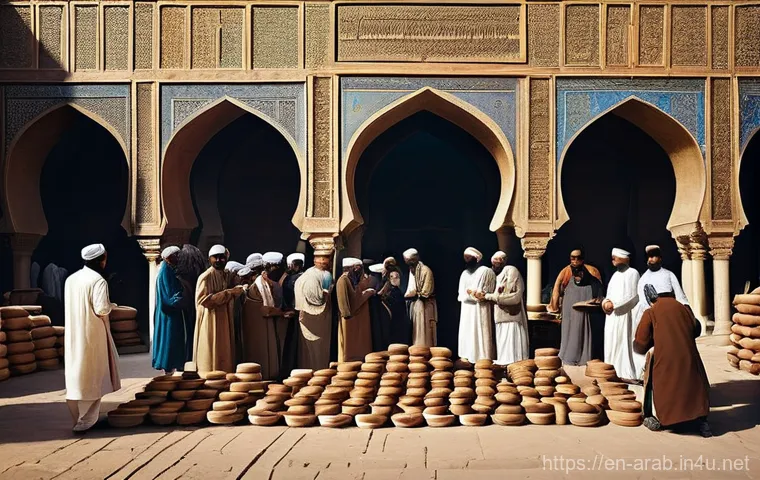
You know, it’s funny how things get named. We call them “Arabic numerals” in the West, but the real origin story, the *true* spark, began way back in ancient India.
Imagine a world without an easy way to represent large numbers, or worse, without a symbol for “nothing.” That was the reality for many civilizations before Indian mathematicians stepped onto the scene, making breakthroughs that would ripple across centuries.
These brilliant minds in India, particularly during the Gupta Empire, developed a decimal positional notation system. This wasn’t just about different symbols; it was about the *power of place*.
Think about it: in the Roman system, to write a large number, you needed more and more symbols (M, C, L, X, V, I). But with a positional system, the value of a digit changes based on where it sits in a sequence.
This concept, using just nine digits (1-9) and crucially, an ingenious placeholder, revolutionized computation. It’s like discovering a cheat code for mathematics!
The Birth of Zero: A Game-Changer
If there’s one single innovation that truly elevates the Hindu-Arabic system, it’s the concept of zero. I mean, “zero” isn’t just “nothing,” is it? It’s a concept so profound that it took a while for various cultures to fully grasp its power.
In India, around the 6th century AD, mathematicians like Brahmagupta formalized the use of zero not just as a placeholder, but as a number in its own right, with rules for computation.
Before zero, trying to distinguish between, say, 63 and 603 was incredibly cumbersome in many numeral systems that lacked such a symbol. The dot symbol was often used to represent this empty value in early Indian manuscripts, eventually evolving into the circle we recognize today.
This single invention, often attributed to the Indians, truly unlocked the full potential of positional notation, making calculations infinitely more reliable and consistent.
It gave us the ability to express any number, no matter how large, with a mere ten symbols. Seriously, it’s one of the greatest intellectual achievements in human history, laying the groundwork for everything from algebra to modern computing.
Beyond Counting: The Decimal System’s Influence
The decimal system itself, leveraging these ten symbols and the concept of place value, made complex arithmetic operations like multiplication and division vastly simpler.
Previously, many societies relied on counting boards or abacuses for even basic calculations, and checking your work often meant redoing the entire thing.
The Indian system, however, allowed users to perform calculations on paper and easily verify their steps. This wasn’t just a mathematical convenience; it was an economic revolution waiting to happen.
The sheer efficiency it offered would later accelerate trade, science, and engineering in ways that were unimaginable with older, more cumbersome systems.
The Golden Bridge: How Arabic Scholars Carried the Torch
From India, these groundbreaking ideas didn’t just hop over to Europe overnight. There was a vital bridge, a period of incredible intellectual flourishing in the Islamic world, often called the Islamic Golden Age.
It was here that Arab scholars, recognizing the sheer brilliance of the Indian system, embraced, refined, and further disseminated these numerals. Imagine the intellectual curiosity it took to adopt a new system when established methods were already in place!
This wasn’t just passive adoption; it was active engagement and development.
Al-Khwarizmi: The Algorithm’s Architect
One of the most pivotal figures in this journey was Muhammad ibn Musa al-Khwarizmi, a Persian mathematician who lived in Baghdad around 780-850 AD. His systematic approach to mathematics was so profound that the very word “algorithm” is derived from his name.
Al-Khwarizmi authored a groundbreaking book, “On the Calculation with Hindu Numerals,” around 820 AD, which was instrumental in spreading the Hindu-Arabic numeral system throughout the Middle East.
He wasn’t just translating; he was codifying and explaining the system in a way that made it accessible and understandable. I bet he had no idea his name would become synonymous with the very backbone of our digital world!
His work became the bedrock for further mathematical advancements and a crucial stepping stone for the numerals’ eventual journey to Europe.
Cultural Exchange and Practical Application
The spread of Islam created an expansive intellectual network, linking various regions and cultures. Arabic became a major scholarly language, and the vibrant trade routes of the Islamic Caliphate facilitated the exchange of goods, ideas, and, yes, numerical systems.
Merchants, always looking for efficiency, quickly saw the benefits of these new numerals for complex transactions, currency conversions, and keeping meticulous records.
It made communication and business easier between traders across vast distances, as they were now effectively “speaking the same language” when it came to numbers.
This practical application by merchants was a huge driver for their adoption, far beyond just academic circles.
Europe’s Awakening: From Roman Stifling to Renaissance Flourish
Now, let’s talk about Europe. For centuries, they were largely stuck with Roman numerals, a system that, while iconic (who doesn’t love seeing MCMXCVIII on a movie copyright?), was incredibly cumbersome for any serious calculation.
Seriously, try multiplying MCMXCVIII by CCLVII in your head! It’s a nightmare. The concept of zero was practically nonexistent in a functional sense, and positional notation was a distant dream.
Imagine trying to run a thriving economy with that system – it was possible, but slow and prone to errors, often requiring counting boards and specialized tools.
Fibonacci’s Breakthrough: Liber Abaci
The big turning point for Europe came in the 13th century with an Italian scholar named Leonardo of Pisa, better known as Fibonacci. His father was a merchant, and Fibonacci traveled with him to North Africa, where he encountered the Hindu-Arabic numeral system firsthand from Arab traders.
He was immediately struck by its superiority. In 1202, he published his seminal work, *Liber Abaci* (Book of Calculation), which was basically a commercial arithmetic textbook that passionately advocated for the adoption of these “Indian figures” and their place-value system.
Fibonacci’s book wasn’t just theoretical; it demonstrated the practical advantages for merchants, surveyors, and architects. He showed *how* to add, subtract, multiply, and divide using these numbers, making a compelling case for their efficiency.
I can almost picture the “aha!” moments across bustling Italian marketplaces as merchants realized the potential.
Overcoming Resistance: A Slow but Steady March

Despite the obvious advantages, the adoption of Arabic numerals in Europe wasn’t an overnight phenomenon. There was significant resistance, partly due to cultural conservatism – Roman numerals had been used for millennia and were deeply ingrained – and partly due to prejudice against anything perceived as “un-Christian” or originating from the Islamic world.
Also, the new system, with its ease of manipulation, was initially seen as more susceptible to fraud (e.g., turning a ‘3’ into an ‘8’ was easier than altering Roman numerals with their specific “flicks” to prevent tampering).
It was a gradual process, but the economic revolution of the 12th and 13th centuries, particularly in places like Northern Italy with its burgeoning merchant-banking sector, created an undeniable need for more efficient calculation methods.
By the 15th century, with the invention of the printing press, texts explaining and standardizing these numerals became widely available, accelerating their adoption across the continent.
| Feature | Roman Numerals | Hindu-Arabic Numerals |
|---|---|---|
| Symbols Used | I, V, X, L, C, D, M (7 symbols) | 0, 1, 2, 3, 4, 5, 6, 7, 8, 9 (10 symbols) |
| Concept of Zero | Absent | Present and fundamental |
| Positional Notation | No (additive/subtractive) | Yes (value depends on position) |
| Ease of Complex Calculation | Very difficult, often required abacus | Much easier, enabled written arithmetic |
| Representation of Large Numbers | Cumbersome, required many symbols | Efficient, uses same symbols with place value |
The Universal Language: Uniting a Numbered World
Today, it’s virtually impossible to imagine a world without Arabic numerals. They are so deeply woven into the fabric of our daily existence that we rarely stop to appreciate their profound impact.
From the simplest grocery bill to the most complex scientific equation, these ten digits are the silent, ubiquitous heroes of our modern age. Their journey is a testament to the power of cultural exchange and the universal human drive for efficiency and understanding.
Powering the Digital Age
Think about our digital world for a moment. Every single computer, smartphone, and smart device runs on binary code, a system of 0s and 1s. This binary system, and indeed other bases like octal and hexadecimal used in computing, fundamentally relies on the principles of positional notation and the existence of zero that were perfected in the Hindu-Arabic system.
Without that crucial concept of zero to represent an “empty” value, the entire edifice of digital technology would crumble. It’s truly mind-boggling when you stop to consider that the very foundation of our high-tech lives rests on an ancient Indian innovation, transmitted and refined through Arab scholarship, and finally embraced by the West.
Everyday Impact and Beyond
Beyond the digital realm, Arabic numerals underpin nearly every aspect of modern life. They are essential for finance, enabling everything from balancing budgets and calculating interest rates to analyzing complex financial data across global markets.
In science and engineering, they are the indispensable language for measuring, modeling, and describing the universe, from the smallest atomic particles to the vastness of space.
Education relies on them as the primary system for teaching and learning mathematics, forming the base for advanced concepts like algebra and calculus.
This global dominance isn’t accidental; it’s a testament to their unparalleled efficiency, simplicity, and versatility. The enduring legacy of these numerals, truly, is one of innovation and connection, reminding us that knowledge, when shared, has the power to transform the world.
Wrapping Up Our Number Journey
Well, there you have it, folks! What an incredible ride through the history of those ten humble digits we take for granted every single day. When I first started peeling back the layers of this story, I genuinely didn’t expect to find such a rich tapestry of innovation, cross-cultural collaboration, and sheer human ingenuity.
It’s truly a testament to how seemingly small, intellectual leaps can profoundly reshape civilizations and pave the way for advancements we couldn’t even dream of.
Learning about the journey of these “Arabic numerals” from ancient India, through the hands of brilliant Arab scholars, and finally to a transformative embrace in Europe, really makes you appreciate the interconnectedness of our world and the power of shared knowledge.
I hope you’re leaving this post with a newfound appreciation for every number you encounter, seeing not just a value, but a piece of history!
Useful Information You Might Just Love
1. Ever wondered why we call those digits “digits” in the first place? It actually comes from the Latin word “digitus,” meaning finger or toe! It’s a neat little nod to our earliest methods of counting, using our ten fingers and toes as nature’s original abacus. Think about that the next time you’re tallying something up – you’re channeling ancient mathematicians! There’s something wonderfully human about that connection, isn’t there? It reminds us that even the most complex systems often have their roots in the simplest, most intuitive actions, showing how our natural world inspires our intellectual advancements.
2. While we predominantly use a base-10 (decimal) system, many fascinating number systems exist! Computers, for example, primarily operate on a base-2 (binary) system, using only 0s and 1s. Then there’s base-16 (hexadecimal), often used in computing to represent binary numbers in a more compact form, or base-60 (sexagesimal) from ancient Mesopotamia, which still influences our timekeeping (60 seconds in a minute, 60 minutes in an hour) and angular measurements (360 degrees in a circle). Exploring these different bases can really stretch your understanding of how numbers work beyond our everyday usage, revealing the underlying logic that powers our digital world and even our clocks.
3. Mental math isn’t just a party trick; it can genuinely boost your brainpower and everyday efficiency. Simple techniques like rounding numbers, breaking down complex calculations into smaller, manageable steps, or learning basic multiplication and division shortcuts can save you time and make you feel more confident with numbers. For instance, to multiply by 9, you can multiply by 10 and then subtract the original number. Or to multiply by 5, multiply by 10 and divide by 2! These little tricks are often overlooked but, trust me, they make a huge difference in grocery stores, budgeting, or just quickly figuring out a tip at a restaurant. It’s like having a secret mathematical superpower!
4. The concept of “infinity” is one of the most mind-bending ideas in mathematics, representing something without any limit or end. It’s not a number in the traditional sense, but rather a concept that has fascinated philosophers and mathematicians for millennia. Whether you’re thinking about the infinite number of stars in the universe, the endless sequence of natural numbers, or the incredibly small points that make up a line segment, infinity challenges our intuition and opens up vast realms of thought. It’s a journey into the boundless, reminding us that there are always new horizons to explore in the world of numbers, pushing the very limits of our comprehension and imagination.
5. Have you ever considered how different currencies leverage our number system? From the smallest cent to the largest banknote, every monetary transaction relies on the decimal system. Understanding decimal places is crucial for everything from balancing your personal budget to comprehending global economics. The way countries worldwide have adopted and standardized this system, regardless of their native language or culture, underscores its universal efficiency. It’s a powerful unifier, allowing seamless trade and financial interaction across borders, proving that numbers truly are a universal language that facilitates connection and commerce on a grand scale, making our interconnected world possible.
Key Takeaways: A Number’s Enduring Legacy
The journey of the Hindu-Arabic numeral system is a captivating tale of intellectual evolution and cultural exchange, underpinning much of our modern world.
It began with ingenious Indian mathematicians who introduced the revolutionary concepts of positional notation and, crucially, the symbol for zero. This innovation dramatically simplified calculations, paving the way for more complex mathematical thought.
The torch was then expertly carried by scholars in the Islamic Golden Age, who not only preserved but also refined and widely disseminated these numerals throughout the Middle East, with figures like Al-Khwarizmi being instrumental in codifying their use.
Europe, initially bound by cumbersome Roman numerals, eventually embraced this superior system, largely thanks to pioneers like Fibonacci, whose *Liber Abaci* showcased its practical advantages.
While facing initial resistance, the undeniable efficiency of these ten digits ultimately led to their universal adoption, transforming everything from commerce and science to the very foundation of our digital age.
Their enduring legacy is a powerful reminder that fundamental ideas, when shared and embraced across cultures, have the power to profoundly shape human progress and connect us all.
Frequently Asked Questions (FAQ) 📖
Q: So, if these numerals are so ancient, why do we call them “
A: rabic numerals” instead of something else? It feels a bit confusing! A1: I remember when I first stumbled upon this fact, it totally blew my mind!
You see, even though we call them “Arabic numerals,” their true birthplace isn’t actually in the Arabian Peninsula. Nope! These amazing digits, from 0 to 9, actually originated in ancient India.
Indian mathematicians developed this brilliant positional numeral system, complete with the concept of zero – a real game-changer! So, how did they get their “Arabic” moniker?
Well, Arab scholars played a massive role in transmitting this system to the Western world. They learned it from India, refined it, and then, as trade and scholarship flourished, they introduced it to Europe.
It was through their incredible work, like Al-Khwarizmi’s famous book on arithmetic, that Europeans encountered and adopted these numbers. So, it’s more of a credit to their role as cultural conduits rather than their origin.
Pretty cool how history works, right?
Q: What made “
A: rabic numerals” so much better or more revolutionary than the older number systems, like Roman numerals, that people were using? A2: Oh, this is where the real magic happens!
If you’ve ever tried to do complex multiplication or division with Roman numerals – say, CMLXVII times DCCCXLII – you’ll quickly realize it’s a nightmare!
Before the Indian numeral system (which became “Arabic numerals”), many systems, like the Roman one, were additive. Each symbol had a fixed value, and you just added them up.
But these new numerals? They introduced the concept of place value and, critically, the number zero. Imagine trying to distinguish between 10 and 1 without a zero, or doing calculus!
Zero wasn’t just ‘nothing’; it was a placeholder that allowed for incredibly efficient calculations. This wasn’t just about making math class easier; it literally unlocked advancements in astronomy, engineering, finance, and eventually, computers.
It’s like going from counting on your fingers to having a supercomputer – the difference in capability is just astounding. When I first grasped the power of zero, I felt like I’d found a secret key to understanding the modern world.
Q: How did these “
A: rabic numerals” manage to spread across such vast distances and become the universal language of numbers we use today? A3: You know, sometimes I imagine these tiny numerals on a grand adventure!
Their spread wasn’t a single event but a gradual, organic diffusion fueled by necessity and intellectual curiosity. It started with those brilliant Indian scholars.
Then, the flourishing Islamic Golden Age saw these numbers embraced, studied, and improved upon by scholars who understood their immense potential. As the Islamic empire expanded and its trade routes connected East and West, these numerals traveled with merchants, scholars, and explorers.
Imagine caravans crossing deserts, ships sailing seas, all carrying not just goods, but ideas. European scholars, often traveling to centers of learning in the Islamic world, encountered them and slowly, very slowly, they made their way into European universities and eventually everyday commerce.
It wasn’t an overnight sensation; it was a slow burn of practicality proving its worth over centuries, eventually becoming indispensable for everything from banking to navigation.
It really shows how powerful a simple, elegant idea can be when given the chance to travel!