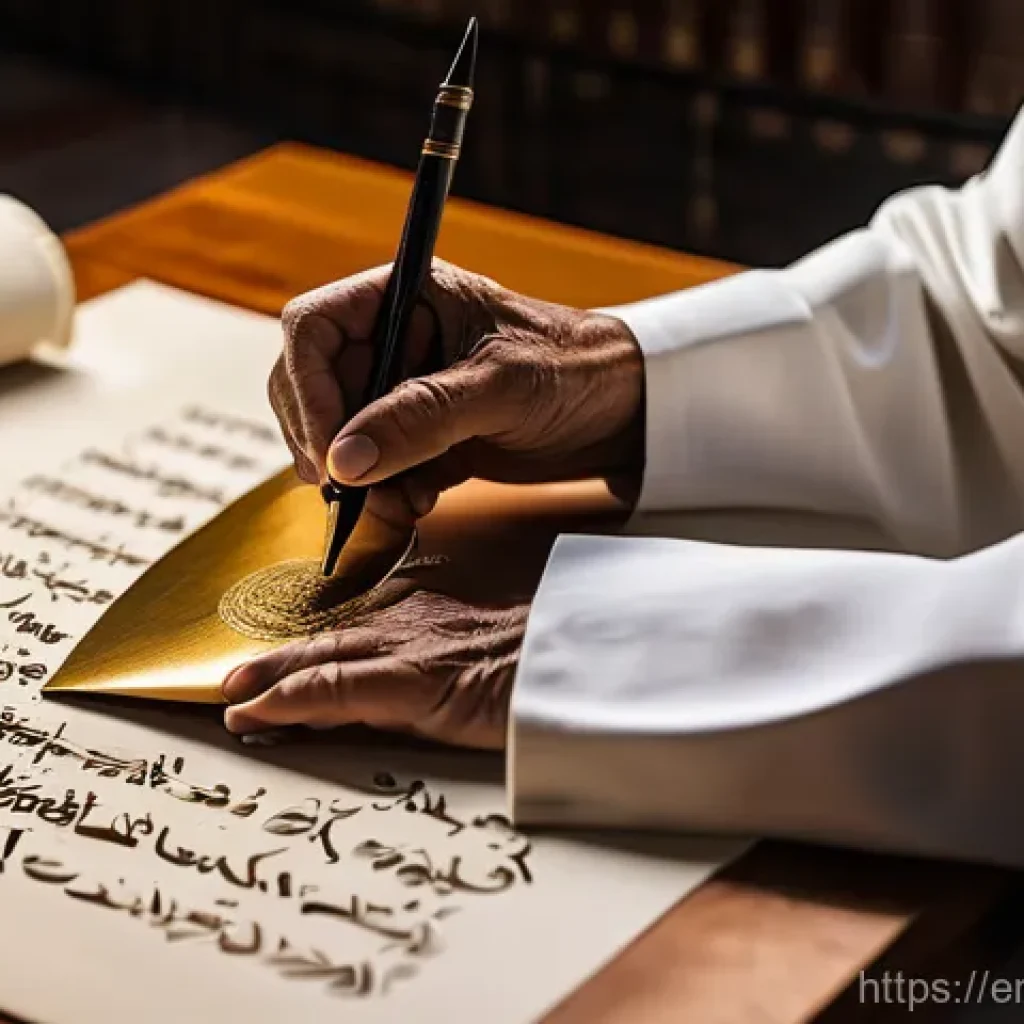
Hey language lovers! Have you ever found yourself utterly captivated by the beauty and depth of the Arabic language, yet felt a tiny shiver of apprehension when thinking about its grammar?
I totally get it! My own journey into Arabic started with that mix of excitement and a sprinkle of ‘how am I ever going to get this?’ But trust me, learning Arabic isn’t just about mastering a new skill; it’s about unlocking a whole new world of rich history, vibrant cultures, and incredible opportunities that are more relevant than ever in our interconnected world.
With its growing global influence, understanding Arabic grammar is becoming a true superpower, opening doors in everything from international business to diplomacy and even cutting-edge tech.
Many folks worry about the unique script or the idea of complex conjugations, and yes, it does present a fresh challenge compared to many European languages.
But honestly, that challenge is exactly what makes it so rewarding! Think of it as a fantastic brain workout that boosts your cognitive skills and mental agility.
The good news is, learning Arabic grammar doesn’t have to be overwhelming. Forget those dusty textbooks that make you just memorize endless rules; the real secret lies in breaking things down, practicing smartly, and approaching it with a genuine curiosity.
I’ve found that focusing on practical application and embracing the quirks makes all the difference, and you’ll be amazed at how quickly you start seeing patterns and making connections.
If you’re ready to transform that apprehension into pure linguistic confidence and truly connect with a language spoken by over 400 million people, you’ve come to the right place.
Let’s dive into the fascinating world of Arabic grammar together, and I’ll show you exactly how to tackle it!
Decoding the Majestic Arabic Script: Beyond the Squiggles

Okay, let’s be real for a moment. When you first look at Arabic script, it can feel like a beautiful, intricate puzzle, right? All those elegant curves and dots, flowing from right to left – it’s a far cry from the Latin alphabet we’re used to. But honestly, that initial ‘whoa’ factor quickly turns into appreciation once you start to grasp its logic. I remember feeling a bit intimidated, thinking I’d never get the hang of writing in such a fluid, connected way. However, it’s not just about memorizing shapes; it’s about understanding a system that’s incredibly logical and, dare I say, almost poetic. Each letter has multiple forms depending on its position in a word – isolated, initial, medial, or final – and mastering these variations is like unlocking a secret code. This interconnectedness is part of its beauty, and it makes Arabic writing truly unique. It’s a script that’s used for far more than just Arabic, too, being the foundation for languages like Persian, which just highlights its versatility. Instead of seeing it as a hurdle, I’ve come to view it as the gateway to a rich linguistic experience. The way words flow together visually, sometimes even influencing the pronunciation of preceding or succeeding letters, truly makes it a living, breathing component of the language itself. Once you begin to read it, you’ll feel a deeper connection to the culture and history embedded in every stroke.
The Art of Calligraphy and Connecting the Dots
The visual aspect of Arabic isn’t just for reading; it’s an art form in itself. Have you ever seen breathtaking Arabic calligraphy? It’s absolutely stunning, and it’s a direct extension of the script’s inherent design. Understanding how letters connect isn’t just academic; it’s fundamental to being able to read *and* write naturally. Unlike English, where letters mostly stand alone, Arabic letters often join together, creating a continuous flow. This cursive nature is standard, even in printed texts, which was a mind-bender for me initially. It’s not just about aesthetics; it actually helps differentiate between letters that might otherwise look similar, especially with the placement of dots. Some letters change quite dramatically in shape based on their position, and getting comfortable with these shifts is a game-changer. I found that practicing simple letter combinations daily, even just tracing them, helped my brain ‘see’ the patterns rather than just individual characters. It’s like learning to connect cursive letters in English, but with a whole new set of shapes and rules. The more you immerse yourself, the more these ‘squiggles’ transform into recognizable, meaningful components of every word you encounter, and the more you appreciate the elegant dance they perform on the page.
Mastering the Sounds: Phonetics and Pronunciation Power-Ups
Beyond the visual, getting the sounds right in Arabic is a whole other adventure, and it’s one that truly enhances your understanding of the grammar. Arabic has some unique sounds that don’t exist in English, and trust me, some of them are a real workout for your throat! I remember trying to pronounce “ع” (Ayn) or “خ” (Khaa) for the first time and feeling like I was gargling. But honestly, embracing these new sounds is crucial because they can completely change the meaning of a word. It’s not just about being understood; it’s about precision. The short vowels, or ‘harakat,’ are tiny marks above or below consonants that are often omitted in regular writing but are absolutely essential for correct pronunciation and grammatical understanding. For instance, a small ‘dammah’ (an ‘u’ sound) might indicate a nominative case, while a ‘fathah’ (an ‘a’ sound) could mean accusative. Neglecting these can lead to misinterpretations, so while they might seem minor, they carry significant weight in forming coherent sentences. My tip? Find a native speaker, or use apps with excellent pronunciation guides, and mimic them relentlessly. It might feel awkward at first, but your ears and your confidence will thank you for it!
Unearthing the Heart of Words: The Triliteral Root System
Now, if there’s one aspect of Arabic grammar that truly blew my mind and changed how I approached the language, it’s the incredible triliteral root system. This is where Arabic grammar gets its reputation for being both challenging and incredibly logical, and once you get it, it feels like you’ve unlocked a secret linguistic superpower! Imagine nearly every word in Arabic, whether it’s a verb, a noun, or an adjective, stemming from a core set of three consonants. These three letters hold the fundamental meaning of the word, and then different patterns of vowels, prefixes, and suffixes are added around them to create variations and new words. It’s like having a universal DNA for words. When I first heard about this, I was skeptical, but seeing it in action completely transformed my vocabulary acquisition. Instead of memorizing isolated words, you start to see families of words, all connected by their root meaning. It’s an elegant system that provides a deep insight into the language’s structure and makes learning new vocabulary far more intuitive and interconnected than in many other languages I’ve studied. You’ll find yourself playing detective, trying to guess the meaning of an unfamiliar word just by identifying its root.
Recognizing Patterns: Your Superpower for Vocabulary
The beauty of the triliteral root system truly lies in its predictability. Once you grasp a root, say K-T-B (ك-ت-ب), which inherently relates to “writing,” you’ll start recognizing its derivatives everywhere. Think about it: from just those three letters, you get words like “kitab” (book), “kataba” (he wrote), “katib” (writer), and “maktab” (office/desk). It’s like a linguistic shortcut that dramatically accelerates your vocabulary growth. I remember the sheer joy when I first started seeing these connections – it felt like a lightbulb turning on! Instead of blindly memorizing “maktab” as “office,” I now understand it as “a place of writing” or “a tool for writing,” deepening my comprehension and retention. This isn’t just about memorization; it’s about understanding the underlying logic of the language. It makes the task of expanding your vocabulary feel less like a chore and more like an exciting treasure hunt, where each new root you discover unlocks a whole new set of related terms. It’s a truly foundational concept that, once mastered, will make you feel so much more confident in navigating the Arabic lexicon.
From Root to Richness: Understanding Word Families
The triliteral root system isn’t just for verbs and nouns; it extends its influence to adjectives and even some prepositions, creating intricate word families that enrich your understanding of the language’s nuances. It’s a constant reminder that Arabic isn’t just a collection of words; it’s a highly structured and interconnected system. For instance, consider the root R-H-M (ر-ح-م). This root connects words like “rahim” (womb), “rahma” (mercy), and “Rahman” (the Merciful, one of God’s names). You can see how the core concept of “mercy” or “compassion” emanates from this root, extending to the very concept of a mother’s womb as a place of nurturing and care. This kind of deep semantic connection is what makes learning Arabic so utterly fascinating. It’s like peeling back layers of meaning, and each layer reveals something profound about the language and the culture it represents. Initially, it might seem like a lot to take in, but once you start to actively look for these roots and their patterns, you’ll find that your intuition for the language grows exponentially. It’s a unique characteristic that, in my experience, makes Arabic stand out and rewards diligent study with profound insights.
The Case for Cases: Navigating Nouns and Their Roles
Alright, let’s talk about something that can feel a bit like a tangled knot at first but is absolutely crucial for proper Arabic sentence construction: noun cases. If you’re coming from English, which largely lacks grammatical cases, this can feel like a big leap. But trust me, once you understand the logic, it truly makes sentences more precise and eliminates ambiguity, which is something I deeply appreciate now. In Arabic, nouns aren’t just nouns; they have jobs in a sentence, and these jobs are indicated by specific endings, called case endings or ‘i’rab’. There are three main cases: nominative, accusative, and genitive. These tiny changes at the end of a word tell you whether a noun is the subject, the object, or if it’s showing possession or following a preposition. I remember spending ages trying to figure out why a word would change its ending, feeling like I was missing something fundamental. But then, it clicked: these endings are the traffic signals of Arabic sentences, guiding you to understand who is doing what to whom. Without them, sentences could be a jumbled mess, and that’s why mastering these cases is so vital. It’s a bit of a mental shift, but a truly rewarding one, as it gives you a much deeper appreciation for the clarity and structure of the language.
The Big Three: Nominative, Accusative, and Genitive
Let’s dive into the core of it: the three main cases. The Nominative case (مرفوع – marfū3) is typically used for the subject of a sentence – the noun performing the action. It’s often marked by a ‘dammah’ (ـُ) sound at the end. Think of it as the ‘doer’ of the sentence. The Accusative case (منصوب – manSūb) is for the direct object – the noun receiving the action. This one often takes a ‘fathah’ (ـَ) sound. And finally, the Genitive case (مجرور – majrūr) indicates possession or follows a preposition, usually marked by a ‘kasrah’ (ـِ) sound. I used to get these mixed up constantly, but visualizing the actions helped a lot. “The *boy* (nominative) read the *book* (accusative) *of the teacher* (genitive).” See how they each have a distinct role? It’s not just about memorizing the vowel endings, but truly internalizing their function. These cases are the foundation for understanding who’s doing what in an Arabic sentence, and without a solid grasp, you’ll find yourself struggling to follow even simple conversations. Regular practice with sentence examples, focusing on identifying the case of each noun, is what ultimately made these distinctions second nature for me. It’s a puzzle that, once solved, opens up so many possibilities in your understanding.
Definite and Indefinite: A Small Detail, A Huge Difference
Adding another layer to our understanding of nouns is the concept of definiteness. In English, we use “a/an” for indefinite and “the” for definite. Arabic has its own elegant way of handling this, and it ties directly into those case endings we just discussed. A definite noun typically starts with the prefix “al-” (الـ), equivalent to “the.” When a noun is indefinite, it usually doesn’t have “al-” and its case ending will be ‘nunated,’ meaning it has a double vowel sound, like “-un” for nominative, “-an” for accusative, and “-in” for genitive. This ‘nunation’ (tanween) is a small detail that carries significant grammatical weight. For example, “kitabun” (a book, nominative indefinite) vs. “al-kitabu” (the book, nominative definite). Getting this right is super important because it can completely change the specificity of what you’re talking about. I’ve definitely made mistakes here, saying “a book” when I meant “the book,” leading to some funny misunderstandings! But it’s these little details that, when mastered, elevate your Arabic from simply being understood to being truly grammatically correct and nuanced. It’s a testament to the precision embedded in the language, where even a tiny vowel mark can convey a world of meaning. The definite article also has its own quirks with ‘sun’ and ‘moon’ letters, influencing its pronunciation, which adds another enjoyable challenge to the mix.
Verbs in Action: Tenses, Moods, and the Human Element
Ah, verbs! The engines of any language, and Arabic verbs are no exception. They’re where all the action happens, and they’re incredibly rich in meaning, carrying information about who is doing what, when, and even how they feel about it. For many learners, verb conjugations can seem like a daunting mountain to climb because Arabic verbs are highly inflected, meaning they change quite a bit to reflect person, number, gender, and tense. It’s not just about past, present, and future, though those are definitely the main categories. Arabic also has different ‘verb forms’ or ‘patterns’ that completely transform the root’s meaning, adding layers of nuance like making an action causative, reflexive, or intensive. I remember feeling overwhelmed by the sheer number of possibilities at first, but what truly helped me was realizing that these changes follow incredibly logical patterns. Once you understand the underlying structure, it’s like having a master key that unlocks a vast array of meanings. It’s a beautifully systematic aspect of the language, and mastering it makes you feel like you’re truly speaking Arabic, not just piecing words together.
Conjugation: It’s Not as Scary as It Sounds
Let’s tackle the beast: verb conjugation. While it might look intimidating with all the prefixes and suffixes, the good news is that Arabic conjugation is remarkably systematic. Verbs generally conjugate based on the person (first, second, third), number (singular, dual, plural), and gender (masculine, feminine) of the subject. So, for example, the past tense of “to write” (كتَبَ – kataba) changes like this: “katabtu” (I wrote), “katabta” (you (m) wrote), “katabat” (she wrote). See? There’s a consistent logic at play. I’ve found that drilling these patterns with common verbs, especially using flashcards and repetition, makes a huge difference. Don’t try to memorize every single form for every single verb at once. Instead, focus on understanding the patterns for a few core verbs across all pronouns, and then you can apply that knowledge to new verbs. It’s like learning to ride a bike; initially, you might wobble, but with consistent practice, it becomes second nature. The patterns in Arabic are your friends here, not your enemies, and recognizing them is truly the key to unlocking fluency in verbal expressions.
The Power of Verb Forms: Building Nuance and Meaning
Beyond simple conjugation, Arabic verbs have what are often called “verb forms” or “stems” (الأوزان – al-awzan), which are systematic modifications to the triliteral root that generate a whole new set of meanings. There are typically ten main forms, and each one subtly or dramatically alters the original meaning of the root. For instance, from the root K-T-B (to write), you get Form I (kataba – to write), but then Form II (kattaba – to make someone write, to dictate), or Form V (takattaba – to correspond with each other). This is where Arabic truly shines in its expressiveness and efficiency. Instead of adding extra words or phrases to convey a causative or reflexive meaning, Arabic simply changes the pattern of the verb. It’s incredibly elegant and, once you understand these patterns, it’s like gaining access to a whole new dimension of the language. I distinctly remember the “aha!” moment when I started to connect these forms and realize how much information a single verb could convey. It’s not just about expanding your vocabulary; it’s about expanding your *conceptual* understanding of how Arabic expresses complex ideas concisely. This system is a powerful tool for expressing nuance and is a hallmark of the language’s depth.
Exploring Moods: Command, Certainty, and Possibility
Just like in English, Arabic verbs also convey different moods, adding another layer of expression to your communication. While English uses auxiliary verbs like “should,” “might,” or “would,” Arabic often uses distinct verb forms or particles to express these nuances. The imperative mood, for instance, is used for commands, and it has its own specific conjugation rules. Beyond commands, Arabic allows you to express certainty, possibility, or desire through various grammatical constructs. This is where the language truly comes alive, allowing you to convey not just the action, but your attitude towards it. I’ve found that paying attention to these moods makes my spoken and written Arabic sound so much more natural and human. It’s about going beyond just direct statements and adding those subtle emotional or intentional colorations that make conversations vibrant. Whether you’re making a request, expressing a hope, or giving an instruction, understanding how to utilize these moods correctly adds significant depth to your linguistic repertoire. It’s a beautiful way the language empowers you to be precise in your intentions and feelings.
Crafting Coherent Sentences: The Flow of Arabic Thought

Building sentences in Arabic is another fascinating area where the language often differs from what we’re used to in English, and honestly, it took a bit of rewiring for my brain! While English predominantly uses a Subject-Verb-Object (SVO) word order, Arabic offers more flexibility and two primary sentence structures: nominal and verbal. Understanding these isn’t just about grammar rules; it’s about grasping the very rhythm and emphasis of Arabic thought. I recall feeling a little disoriented when I first encountered sentences that started with a verb, completely flipping my ingrained English sentence structure on its head. But as I immersed myself more, I began to appreciate the elegance and efficiency of these different approaches. It’s not about one being “better” than the other, but about knowing when to use each for optimal clarity and impact. This flexibility allows for a subtle art of emphasis that can sometimes be lost in more rigid language structures. Getting a feel for these structures is fundamental to both understanding native speakers and crafting your own eloquent Arabic sentences, truly making you feel more at home in the language.
Nominal vs. Verbal: Kicking Off Your Sentences Right
The distinction between nominal and verbal sentences is a cornerstone of Arabic syntax, and it’s something you’ll encounter constantly. A nominal sentence (الجملة الاسمية – Al-Jumla al-Ismiyyah) starts with a noun or pronoun and typically describes a state of being, identity, or description. It consists of a subject (mubtada) and a predicate (khabar), often without an explicit “to be” verb – you infer it! For example, “الكتاب كبير” (al-kitab kabeer) means “The book is big.” See how there’s no “is” there? This was a real eye-opener for me, initially feeling like something was missing, but now I find it incredibly concise. In contrast, a verbal sentence (الجملة الفعلية – Jumlah F’i’liyyah) begins with a verb and focuses on actions, events, or states of being. Its primary components are the verb (fi’l) and its subject (fa’il). An example would be “قرأ الطالب الكتاب” (qara’a al-talib al-kitab) – “The student read the book.” The key is what the sentence *starts* with. Mastering this distinction allows you to construct sentences with precision, whether you want to emphasize the subject or the action. It’s a fundamental concept that, once understood, makes a huge difference in how naturally you can express yourself in Arabic.
Word Order Wonders: Flexibility and Emphasis
While English often demands a strict SVO (Subject-Verb-Object) order, Arabic sentences can be surprisingly flexible, especially within verbal sentences, allowing for Verb-Subject-Object (VSO) or even Subject-Verb-Object (SVO) arrangements. This flexibility isn’t random; it often serves to emphasize certain parts of the sentence. For instance, placing the verb first (VSO) is quite common in Modern Standard Arabic and often feels more natural. However, starting with the subject (SVO) can add a particular emphasis to the subject itself. I’ve found this fascinating because it allows for a subtle rhetorical flair that’s not always as easily achieved in English. It’s like having different camera angles for your sentences, each highlighting a different element. Beyond just the main elements, Arabic also demands agreement in gender, number, and case between verbs and subjects, and between nouns and adjectives. This agreement is absolutely critical for grammatical correctness and clarity. So, while you have some flexibility in word order, it’s always within a framework of strict agreement rules. Paying attention to these agreements is what truly polishes your Arabic and makes it sound authentic. It’s a rewarding challenge that makes you appreciate the intricate beauty of the language’s construction, and it allows you to express yourself with incredible precision.
Connecting Ideas: Prepositions and Pronouns as Your Guides
Learning prepositions and pronouns in Arabic felt like connecting the dots on a linguistic map for me. These small but mighty words are absolutely essential for making your sentences flow naturally and for clarifying relationships between different parts of your speech. Without them, your Arabic can sound a bit choppy, like a series of disconnected statements. In English, we use words like “in,” “on,” “at,” “to,” and “from” constantly, and Arabic has its own set of equivalents, each with its specific usage and nuances. Similarly, pronouns are your go-to for avoiding repetition and making your conversations smoother, but in Arabic, they come with extra layers of gender, number, and even dual forms that we don’t really have in English. I remember thinking, “Do I really need a different ‘you’ for two people?” And the answer is, yes, you do in Modern Standard Arabic! It’s these precise distinctions that make Arabic such a rich and expressive language. Mastering these elements makes your communication so much more coherent and allows you to express complex relationships between people, objects, and ideas with remarkable clarity.
Personal Pronouns: Always Handy, Always Crucial
Arabic personal pronouns are fundamental building blocks of almost any sentence, just like in English. However, Arabic takes it a step further with distinct forms for singular, dual, and plural, as well as masculine and feminine genders, particularly in the second and third person. So, you have “anta” (you, masculine singular), “anti” (you, feminine singular), and “antumā” (you two, dual). This level of specificity might seem overwhelming at first glance, but it’s incredibly logical and, once you get used to it, it adds a beautiful precision to your language. I found that creating a simple chart and regularly drilling the pronouns with example sentences helped immensely. Instead of just “he” or “they,” you know precisely *who* you’re referring to. Moreover, Arabic often integrates pronouns directly into verbs as suffixes, which is another cool efficiency of the language. This means you might not always see a separate word for the subject, as the verb conjugation itself implies it! It’s a compact way of conveying a lot of information in one go, and it truly makes your Arabic feel more authentic and fluent. These aren’t just dry grammatical rules; they’re the connectors that make conversations vibrant and clear.
Prepositional Puzzles: Unlocking Direction and Relationship
Arabic prepositions (حروف الجر – huruf al-jar) are like the GPS of your sentences, telling you where things are in time and space, and how different parts of your sentence relate to each other. They’re often single, simple words like “fi” (in), “min” (from), or “ila” (to). But here’s the kicker: they profoundly affect the case of the noun that follows them, always pulling it into the genitive case! So, if you say “al-kitabu” (the book, nominative), but then add the preposition “fi” (in), it becomes “fi al-kitabi” (in the book, genitive). This connection between prepositions and case endings is a perfect example of Arabic’s integrated grammatical system. I remember struggling with this initially, often forgetting to change the case ending after a preposition. It’s a common stumbling block for English speakers, but it’s one of those things that, once you consistently apply it, makes your Arabic sound so much more natural and correct. It’s not just about memorizing a list of prepositions; it’s about understanding their power to influence the words around them and how they establish critical relationships within your sentences. They paint a clearer picture, giving your statements the spatial and temporal context they need to be fully understood.
Real-World Arabic Grammar: Applying What You’ve Learned
Learning grammar in a vacuum, just memorizing rules from a textbook, can feel pretty dry and, frankly, ineffective. What truly brings Arabic grammar to life and makes it stick is applying it in real-world scenarios. This is where the rubber meets the road, and where all those seemingly abstract rules start to make sense and become intuitive. It’s one thing to know *what* a nominative case is, but it’s another entirely to effortlessly use it in a conversation or recognize it instantly when reading. My personal journey transformed when I shifted my focus from rote memorization to active application and immersion. This isn’t just a tip; it’s a fundamental principle for language acquisition. The more you use the grammar in context, the more it becomes a natural part of your linguistic toolkit, rather than a separate set of rules you have to consciously recall. It’s about building muscle memory for your language brain, and that only comes with consistent, deliberate practice in situations that mimic real life.
Immersion: Your Best Friend in Grammar Acquisition
Hands down, immersion is the most powerful tool for internalizing Arabic grammar. No textbook, no matter how good, can replicate the sheer volume of exposure you get from listening to native speakers, watching Arabic media, or reading authentic texts. When you immerse yourself, your brain starts to subconsciously pick up patterns and structures that you might not even consciously realize are grammar rules. I made it a point to listen to Arabic news, watch TV shows with subtitles (and then without!), and even just have Arabic music playing in the background. Initially, it felt like a lot of noise, but gradually, words and phrases started to pop out, and I began to internalize sentence structures and verb conjugations without even trying. Speaking with native speakers, even if it’s just practicing simple phrases, forces you to apply the grammar you’ve learned on the fly, and that’s where true mastery begins. Don’t be afraid to make mistakes; they’re your best teachers. Embrace the beautiful chaos of real language, and you’ll be amazed at how quickly your grammatical intuition develops.
Practical Drills and Daily Integration: Making It Stick
While immersion is fantastic, pairing it with practical drills and conscious daily integration of grammar concepts is a winning combination. This isn’t about sitting down for hours with a grammar book every day, but rather finding creative ways to weave grammar practice into your routine. Apps like Talkpal, Duolingo, and Memrise, for instance, offer interactive exercises that reinforce grammatical concepts in a fun, gamified way. I personally love using flashcards for verb conjugations and case endings, but instead of just writing the isolated word, I’d put it in a simple sentence. Try to compose short sentences or paragraphs every day, focusing on one or two specific grammatical points you’re trying to master, like using definite articles correctly or practicing specific verb tenses. Even journaling in Arabic, however imperfectly, can be an incredible way to solidify your understanding. The key is consistency and making grammar a part of your everyday interaction with the language, rather than a separate academic exercise. The more you actively produce and engage with grammatically correct Arabic, the faster those rules will move from your head to your tongue, and truly become a natural part of your communication.
| Grammar Concept | Key Takeaway for Learners | Why it Matters (My Experience) |
|---|---|---|
| Arabic Script (Alphabet) | Cursive, read right-to-left, letters change form based on position. Short vowels (harakat) are crucial for pronunciation but often unwritten. | Initially daunting, but recognizing connected forms and understanding sound distinctions (even unwritten ones) made a huge difference in reading fluency and confidence. It’s an art form in itself! |
| Triliteral Root System | Most words built from 3 consonants, carrying core meaning. Patterns around roots create new words (verbs, nouns, adjectives). | This was my ‘aha!’ moment! It transformed vocabulary learning from rote memorization to an exciting pattern-recognition game. Unlocks massive word families. |
| Noun Cases (I’rab) | Nominative (subject), Accusative (object), Genitive (possession/after prepositions). Indicated by vowel endings. | Essential for clarifying who does what to whom. Getting these right prevents ambiguity and makes your sentences sound grammatically polished. It’s the traffic light of Arabic syntax. |
| Verb Conjugation & Forms | Verbs conjugate for person, number, gender, tense. Different ‘forms’ (stems) modify root meaning (causative, reflexive, etc.). | Felt scary at first, but realizing the systematic patterns made it manageable. Understanding verb forms opened up a new world of expressing nuance and complex ideas efficiently. |
| Sentence Structure | Can be Nominal (starts with noun, describes state) or Verbal (starts with verb, describes action). Word order can be flexible (VSO/SVO) for emphasis. | Adjusting from SVO English to VSO/SVO Arabic took practice. Recognizing nominal vs. verbal sentences helped immensely in understanding native thought flow and crafting precise statements. |
| Pronouns & Prepositions | Pronouns: specify person, number, gender (incl. dual). Prepositions: link nouns/pronouns, always put following noun in genitive case. | These small words are crucial for sentence coherence and avoiding repetition. Learning specific dual pronouns and how prepositions affect case added layers of precision to my speech. |
Concluding Thoughts
Whew! We’ve covered quite a bit, haven’t we? Diving into Arabic grammar might seem like scaling a linguistic mountain at first, but I truly hope this journey has shown you that it’s an incredibly structured, logical, and ultimately rewarding system. Each time I unlock a new grammatical concept, it feels like another piece of a beautiful, ancient puzzle slots perfectly into place. It’s a marathon, not a sprint, and there will be moments where you feel a bit stuck – trust me, I’ve been there more times than I can count! But what I’ve learned is that patience, persistence, and a genuine curiosity for the language are your best companions. Keep practicing, keep exploring, and most importantly, keep connecting with the rich tapestry of culture and meaning that Arabic grammar gracefully weaves.
Useful Information to Know
1. Learning Arabic grammar isn’t just about textbooks; it’s about *doing*. I’ve found that actively engaging with the language through conversation, even if it’s just a few sentences a day, makes a monumental difference. Try to find a language exchange partner online or in your community. Websites and apps like iTalki or HelloTalk are fantastic for connecting with native speakers who can offer real-time feedback and help you practice those tricky case endings and verb conjugations. It moves grammar from abstract rules to living, breathing communication.
2. Don’t underestimate the power of immersion, even if you can’t physically be in an Arabic-speaking country. I’ve personally curated playlists of Arabic music, watched countless Arabic TV series (starting with subtitles, then daring myself to try without!), and followed Arabic news channels. Your brain is an incredible pattern-recognition machine, and the more authentic exposure you give it, the more naturally those grammatical structures will start to sink in. You’ll begin to ‘feel’ what sounds right, rather than just consciously applying rules.
3. Break down your learning into manageable chunks. Instead of trying to master all verb forms in one go, focus on one form for a week, create example sentences, and actively use it. Similarly, dedicate specific days to drilling nominal vs. verbal sentences. I used to overwhelm myself, but adopting a ‘one concept at a time’ approach made the whole process far less daunting and much more effective. Small, consistent efforts truly compound over time.
4. Embrace mistakes as learning opportunities. Seriously, I cannot stress this enough. I’ve mispronounced words, used the wrong case ending, and completely jumbled sentence structures, leading to some hilarious (and sometimes embarrassing) misunderstandings. But each one of those moments was a chance to learn and refine my understanding. Don’t let the fear of being imperfect stop you from speaking or writing. Native speakers are usually incredibly encouraging and appreciate your effort.
5. Leverage technology wisely. While textbooks are foundational, modern apps and online resources can complement your learning beautifully. Duolingo and Memrise are great for vocabulary and quick grammar drills, but don’t stop there. Look for apps that specifically focus on Arabic morphology and syntax, offering interactive exercises that explain the ‘why’ behind the rules. I also found online Arabic dictionaries that show word conjugations and derivations from triliteral roots to be absolute lifesavers – they help you see the system in action!
Key Takeaways
My journey with Arabic grammar has taught me that it’s a language built on elegant logic and profound depth. We’ve explored the visual beauty of its script, the ingenious efficiency of the triliteral root system, the clarity provided by noun cases, the dynamic nature of its verbs and their many forms, the distinctive flow of Arabic sentence structures, and the precision offered by pronouns and prepositions. It’s a comprehensive system that rewards curiosity and consistent effort. While it may initially present unique challenges compared to English, such as its right-to-left script or the intricate case system, these elements are what make Arabic such a precise and expressive language. The biggest takeaway I can offer is this: view each grammatical concept not as a hurdle, but as a key that unlocks a deeper, richer understanding of this magnificent language and the vibrant cultures it represents. Keep pushing, keep practicing, and you’ll find yourself navigating the nuances of Arabic with increasing confidence and genuine appreciation.
Frequently Asked Questions (FAQ) 📖
Q: What’s the biggest hurdle when you first start learning
A: rabic grammar, and how can you genuinely get past that initial ‘overwhelmed’ feeling? A1: Oh, this is such a common question, and I felt it too! For me, the biggest initial hurdle wasn’t just the new script – though that’s definitely a fun challenge – it was the idea of totally different sentence structures and verb conjugations.
It felt like my brain was trying to process information in a whole new dimension compared to English or even other European languages I’d dabbled in. My personal breakthrough came when I stopped trying to translate word-for-word and instead started understanding the concept behind the grammar.
Don’t try to swallow the whole dictionary on day one. Start small. Master the basic sentence structure, like “This is a book” (هذا كتاب).
Then, focus on understanding the root-and-pattern system for verbs and nouns – it’s like a linguistic cheat code once you grasp it! I also found that using interactive apps and even children’s books in Arabic really helped simplify things and made the learning feel less like a chore and more like a game.
The key is consistent, small steps, celebrating every tiny win, and letting go of the pressure to be perfect from the start.
Q: Beyond just memorizing rules, what are some hands-on, practical ways to truly understand and use
A: rabic grammar in real life? A2: Absolutely! Memorizing paradigms is a starting point, but it won’t get you speaking naturally.
My go-to strategy, which I swear by, is active application. Instead of just reading about a grammar point, immediately try to use it. For example, if you just learned about dual nouns (which is super cool, by the way, Arabic has a special form for exactly two of something!), make up five sentences using dual nouns right away.
Another tip: listen to native Arabic speakers. Podcasts, news broadcasts, music – whatever you enjoy. Pay attention to how they use the grammar you’re learning.
I remember when I was struggling with the various forms of verbs, I started listening to Egyptian pop songs and realized how often certain verb conjugations appeared.
It wasn’t about understanding every word, but about hearing the grammar in action. Then, try to mimic those patterns. Speaking practice, even with yourself, is invaluable.
Describe your day using the grammar you’ve studied. It’s messy at first, but that’s where the real learning happens. Find a language exchange partner online; there are tons of free platforms, and actual conversations will solidify your understanding faster than any textbook ever could.
Q: Is learning
A: rabic grammar really worth the effort for someone outside of academia or specific professional fields? What kind of real-world impact can it actually have?
A3: Oh, 100%, yes! And this is where my passion truly kicks in. It’s not just for scholars or diplomats anymore.
Learning Arabic grammar, and by extension the language, is an absolute game-changer for so many reasons. Personally, it completely transformed my travel experiences.
Instead of just being a tourist, I found myself having authentic conversations with shopkeepers in Marrakech, haggling for spices in Amman, and understanding the nuances of local jokes.
It opens up an incredible window into one of the world’s richest cultural tapestries. Beyond travel, think about how connected our world is now. Understanding Arabic gives you direct access to perspectives you simply won’t get from English-only news.
It’s a huge asset in the tech world too; many innovative companies are looking for people with diverse linguistic skills. And honestly, on a purely personal level, the mental exercise of grappling with Arabic grammar has boosted my cognitive agility in ways I never expected.
It’s like a fantastic brain workout that makes you sharper in other areas of your life. Plus, there’s an immense sense of personal satisfaction and accomplishment that comes from mastering a language that many consider challenging.
It’s truly a superpower in today’s globalized world!